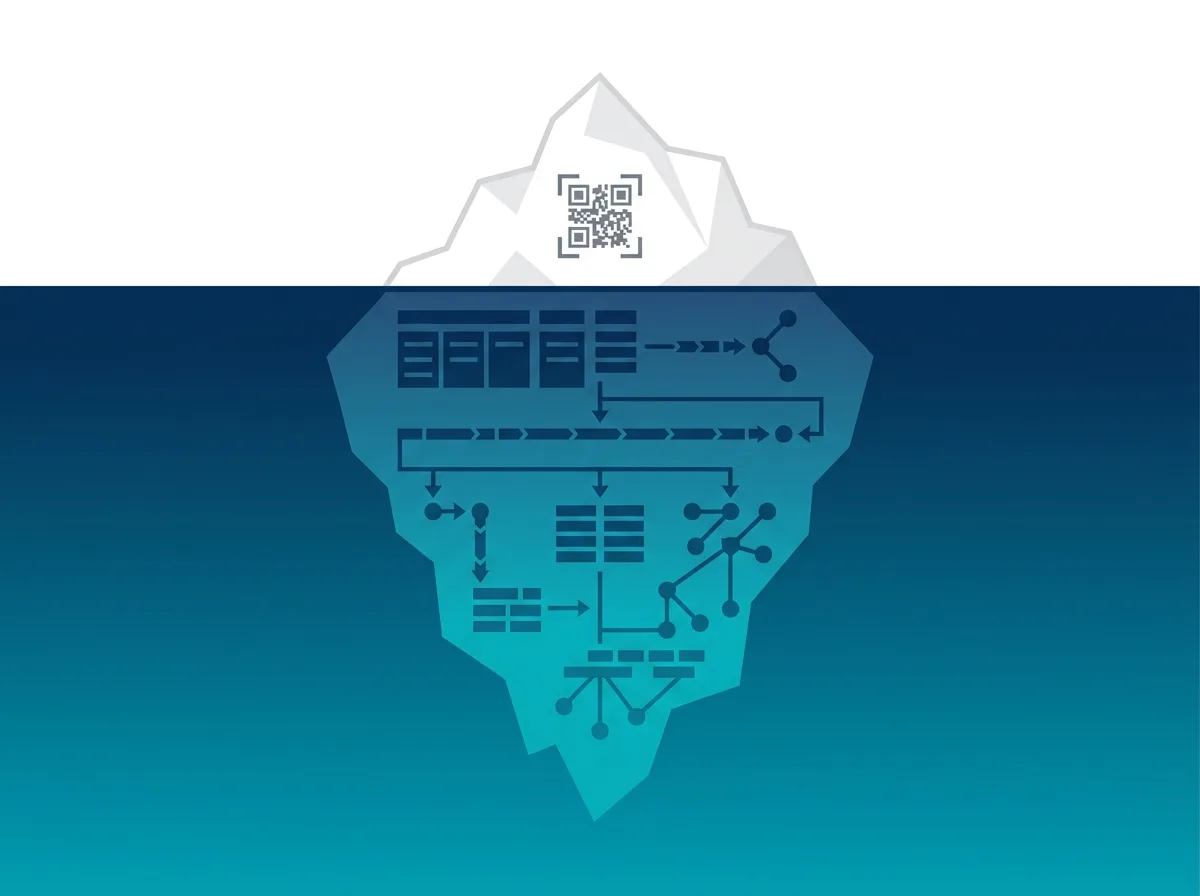
The Hard Part of Digital Product Passport Compliance Isn't the QR Code. It's the Data Behind It.
We deploy and integrate EPCIS 2.0 infrastructure for Digital Product Passport compliance. On your cloud, under your control, built on open standards.
Most Brands Get Stuck at the Same Point
They understand what a Digital Product Passport needs to communicate. What they don't have is structured, standards-compliant event and product data to back it up.
The QR code is the easy part. The data behind it is where the work lives.
Where Traceability Breaks Down
Pharma Serialization Infrastructure
Serialization platforms live or die on their data layer. We build the high-velocity EPCIS event ingestion and query backbone behind pharma software products, so your team ships compliance features instead of rebuilding plumbing.
Agri: Farm-to-Fork Is Still a Black Box
Consumers and regulators want to know where food comes from. Most supply chains cannot answer that end to end. Building field-to-shelf visibility across growers, processors, and retailers is a real engineering challenge.
FMCG: Counterfeits Hide in Plain Sight
Everyday products are being faked at massive scale. Smart packaging helps, but it needs a data backbone. Without digital verification tied to supply chain events, physical labels alone are not enough.
Data Does Not Flow Across Partners
Supply chains span many partners and countries. Everyone needs to share data in a common format. Most do not, and that is exactly where traceability breaks down.
Deploy, Integrate, Maintain Your EPCIS Infrastructure
EPCIS on Your Cloud
We deploy a full EPCIS 2.0 layer on your infrastructure: event capture, query API, GS1 Digital Link resolution, JSON/JSON-LD compliance. You own the system and the data.
This matters if you are a brand that cannot or will not push product data to a third-party platform. Your EPCIS layer runs in your environment, under your control, readable by any system that speaks GS1 standards.
Connecting Your Systems to the EPCIS Layer
We map your business processes to the correct EPCIS event types and build integrations from your ERP, PLM, and supplier systems to get structured event data flowing.
Most brands cannot get standards-compliant event data out of existing systems without custom work. This is project-based, scoped to your specific setup: which systems, which events, which data gaps.
Keeping the Data Layer Current
Standards evolve. Your product catalog grows. New suppliers come on.
We maintain your EPCIS infrastructure as standards evolve, your product catalog grows, and new suppliers come on, so the data stays accurate and audit-ready.
GS1 and EPCIS Standards Are Home Turf
We are not an industry consultancy. We are a software engineering firm that has spent years building on GS1 standards and EPCIS 2.0 at the implementation level.
We are core contributors to OpenEPCIS, the open-source EPCIS 2.0 implementation. We have built GS1-compliant traceability systems tracking 242,000 products across 700 customers in 30 countries. The standards layer is home turf. The domain mapping specific to your industry, we work through together with you.

Where Digital Product Passport Infrastructure Applies
The EU is rolling out DPP requirements across industries on different timelines. The underlying data infrastructure is the same: structured, standards-compliant event data captured through EPCIS. We build that layer. The regulation-specific and domain-specific nuances, we work through together with you. For the detail, see what the GS1 DPP Provisional Standard actually requires and why a Digital Product Passport needs more than a QR code.
Batteries
The EU Battery Regulation requires a Digital Product Passport for EV and industrial batteries starting February 2027. Lifecycle data, material composition, carbon footprint, and recycled content must be structured and queryable.
Textiles & Fashion
Under the EU Strategy for Sustainable Textiles, DPP requirements will cover material sourcing, manufacturing processes, and circularity data. Brands with complex, multi-tier supply chains need event-level traceability to comply.
Electronics & ICT
The Ecodesign for Sustainable Products Regulation (ESPR) brings DPP requirements to electronics. Product durability, repairability, and material data must be captured in a machine-readable, interoperable format.
Construction Products
The revised Construction Products Regulation introduces Digital Product Passports for building materials. Environmental performance data and material declarations need structured, standards-compliant infrastructure behind them.
EUDR (Deforestation Regulation)
The EU Deforestation Regulation requires product-level supply chain traceability with geolocation data for commodities like coffee, cocoa, soy, and palm oil. The EPCIS layer captures and structures the supply chain events that back the due diligence statements.
Chemicals
REACH revision and the broader ESPR scope will extend DPP requirements to chemical products. Substance data, safety information, and supply chain provenance need to flow through a standards-compliant data layer.
Built for Teams That Need the Data Layer, Not Just the Label
Solution Providers & Integrators
If you are building traceability solutions for your clients and need EPCIS infrastructure and integration expertise to deliver, we can be the engineering layer behind your implementations.
Brands Who Want Data Sovereignty
If you want traceability data on your own infrastructure, readable by any standards-compliant system, with no vendor lock-in, we deploy and manage that for you.
Built on OpenEPCIS
OpenEPCIS is the open-source, GS1-compliant EPCIS 2.0 implementation originated by benelog GmbH. Brevitaz Systems is a core contributor to OpenEPCIS. All services on this page are delivered by Brevitaz, built on the OpenEPCIS foundation. The same event model carries food traceability too: see how we map FSMA 204 critical tracking events and key data elements to EPCIS.
Ready to build the data layer for Digital Product Passport compliance?
Tell us about your DPP timeline and current systems. We will scope what the implementation involves.